Glop
General
- Spanish software specialized in hospitality and retail.
- Works on PCs and tablets.
- Allows fast counter sales and simple stock management.
Key Features
- Good customization options.
- Basic inventory control.
- Employee management (time tracking and access permissions).
- Detailed sales reports.
- Integration with mobile ordering platforms.
- Works offline.
- Optional e-commerce integration.
Advantages
- Intuitive for small businesses.
- Affordable cost.
- Good customization options.
Disadvantages
- Not as advanced in cloud functions.
- Manual updates.
Ideal for: Small hospitality or retail businesses looking for a cost-effective and reliable system.

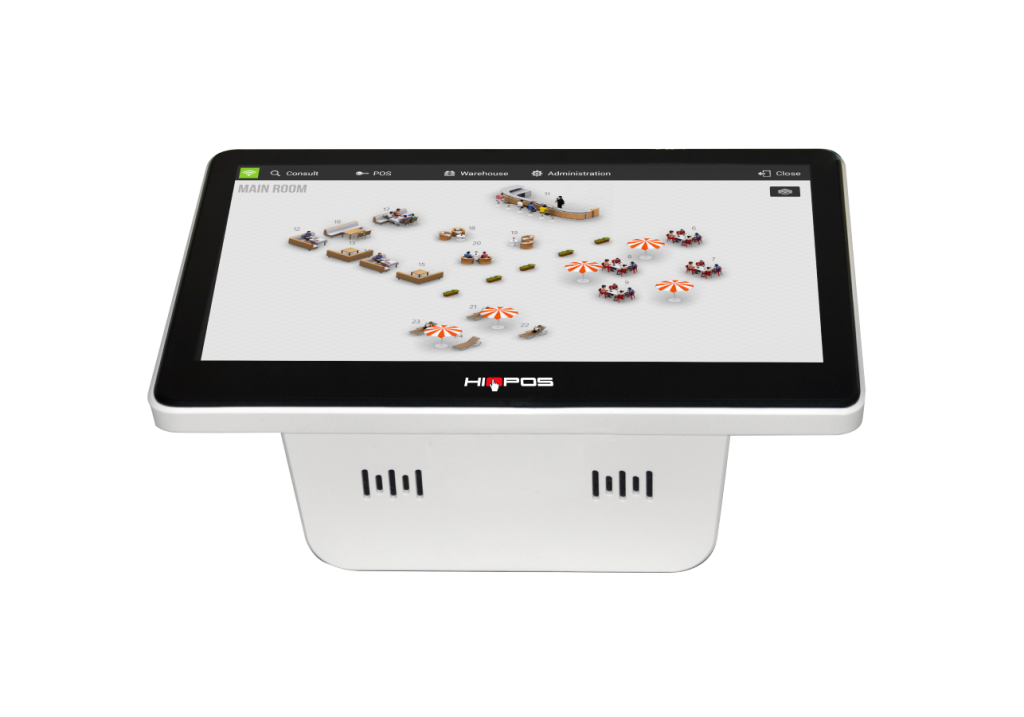
Hiopos
General
- 100% cloud-based platform.
- Highly visual and touch-friendly, with proprietary devices (terminals, kiosks, etc.).
- Especially strong in multi-business management.
Key Features
- Advanced inventory and warehouse control.
- Integration with self-service kiosks, scales, kitchen printers.
- Reservation and delivery management.
- Automatic reports.
- Cloud-based automatic updates.
Advantages
- Highly scalable for multiple locations.
- Visually friendly.
- No-intervention automatic updates.
Disadvantages
- Fully dependent on internet.
- Higher monthly cost.
Ideal for: Modern hospitality businesses seeking automation and a great customer experience.


TiLLer Systems
- System focused on hospitality and retail.
- Stock and purchasing control.
- Employee and schedule management.
- Sales analytics.
- Integration with mobile orders and kitchen displays.
- Customizable interface.
- Scalable solution for small and medium businesses.
- Customizable interface
- Integration with mobile orders and kitchen displays.
- Scalable solution for small and medium businesses.
ABS POS System
- Global system with strong focus on retail and franchises.
- Multi-store management.
- Real-time inventory control.
- Promotions and loyalty program management.
- Offline functionality.
- Integrations with e-commerce and ERPs.
- Advanced reporting and built-in analytics.

| Feature / System | Glop | Hiopos | TiyerSystems | ABS POS System |
| Installation type | PC / Local and Tablet | 100% Cloud | Local + Mobile devices | Hybrid (Local / Cloud) |
| Main industry | Hospitality, Retail | Hospitality, Retail | Hospitality, Retail | Retail, Franchises |
| Stock management | Yes | Advanced | Yes | Real-time |
| Employee management | Basic | Advanced (shifts) | Shift and schedule management | Complete (basic HR) |
| Mobile orders / Tablets | Yes | Yes | Yes | Yes |
| Reports and analytics | Detailed | Visual and automatic | Basic analytics | Advanced, multi-dimensional |
| Offline functionality | Yes | No (cloud only) | Limited | Yes |
| E-commerce integration | Yes | Optional | Not directly available | Yes (advanced) |
| External hardware integration | Standard (cash drawer, printer) | Extended (kiosks, scales) | Basic (kitchen display) | Complete (scales, scanners) |
| Scalability | Small and medium businesses | High, multi-location | SMEs | High, multi-store |
| Extra modules (loyalty, etc.) | Optional | Loyalty, reservations, delivery | Limited | Loyalty programs, promotions |
| Updates | Manual | Automatic in the cloud | Manual | Automatic |